Packaging Inserts Guide: Paperboard vs Molded Pulp vs EVA Foam
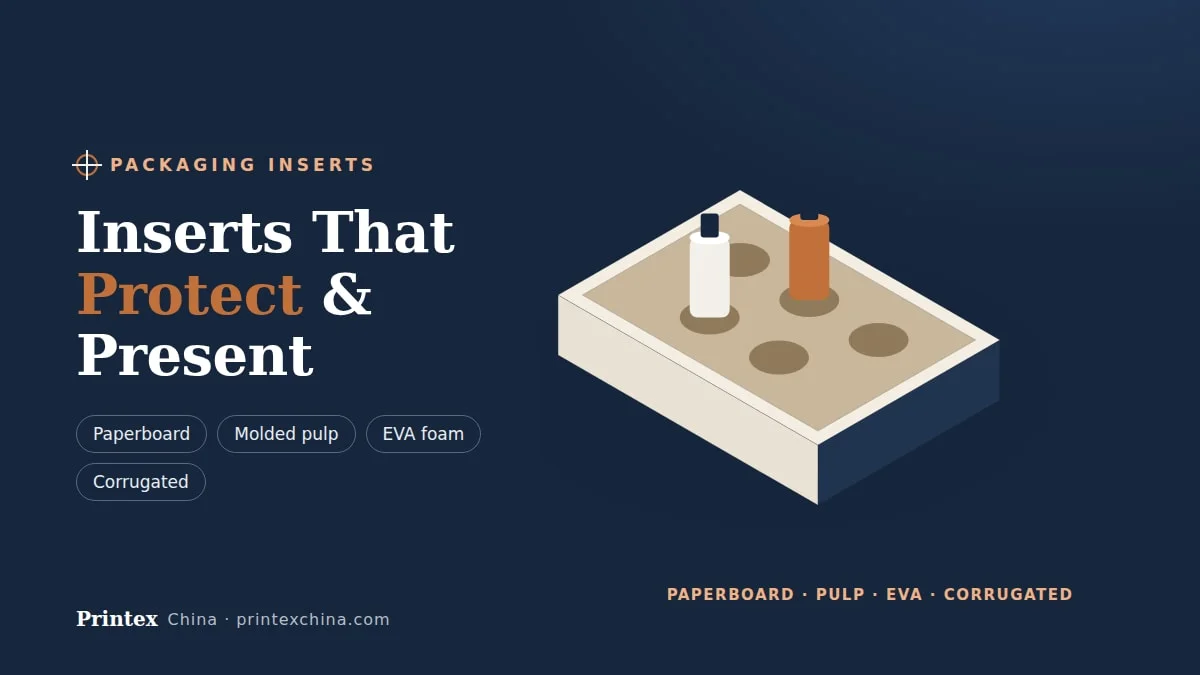
A beautiful box with a product rattling around inside feels cheap. A well-designed insert does the opposite: it holds the product perfectly in place, protects it in transit and frames it like a display. Inserts are often the detail that separates good packaging from great packaging, and they are frequently an afterthought.
This guide compares the main packaging insert materials: paperboard, corrugated, EVA foam, molded pulp and fabric-covered inserts. It explains when to use each one and how to design an insert that fits, protects and presents your product.
Quick answer: Use paperboard or corrugated inserts for most retail and e-commerce products because they are recyclable and cost-effective. Choose molded pulp for plastic-free protection of fragile or heavy items, and EVA foam when you need precise cavities and maximum protection for electronics, glass or high-value sets.
Why Inserts Matter
- Protection: an insert immobilizes the product and absorbs shock from drops and vibration.
- Presentation: products sit upright and perfectly aligned, ready for the unboxing moment.
- Organization: multi-item sets stay in a fixed, logical layout.
- Standardization: one outer box size can fit different products by changing only the insert, which reduces box SKUs and cost.
Paperboard Inserts
Paperboard inserts are die-cut and folded from the same type of board used for cartons. They can be printed, laminated or wrapped to match the box.
- Best for: cosmetics, bottles, jars, small electronics accessories and folding carton packaging.
- Pros: recyclable, low cost, can be printed or color-matched, and ships flat.
- Cons: limited cushioning for very heavy or fragile items, and complex shapes need clever folding designs.
Corrugated Inserts and Dividers
Made from E- or B-flute corrugated board, these inserts add more strength and cushioning than solid paperboard.
- Best for: mailer boxes, multi-bottle shipments, candles, heavier items and e-commerce kits.
- Pros: strong, recyclable, cost-effective, and good for dividers between glass items.
- Cons: a less refined look unless printed or covered, and visible flute edges.
See our corrugated mailers for boxes that pair with corrugated inserts.
Molded Pulp Inserts
Molded pulp is made from recycled paper or plant fibres (such as bagasse or bamboo) formed into precise 3D shapes. There are two main types: wet-pressed (smooth, fine finish) and dry-pressed (rougher, more economical).
- Best for: consumer electronics, glass bottles, cosmetics sets and plastic-free brands.
- Pros: plastic-free and recyclable, good shock absorption and a premium, natural look when wet-pressed.
- Cons: requires a mold (a tooling cost) and a longer development lead time than die-cut inserts.
Molded pulp is a popular replacement for plastic trays and foam. See our sustainable packaging guide.
EVA Foam Inserts
EVA (ethylene-vinyl acetate) is a dense, closed-cell foam that can be cut into precise cavities. It is often flocked or covered with velvet or satin for a luxury look.
- Best for: electronics, fragrance, jewelry, watches, tools and high-value gift sets.
- Pros: excellent protection, precise cavities and a premium feel, especially when covered.
- Cons: plastic-based and harder to recycle, and more expensive than paper inserts.
Other foams such as polyethylene (PE) or sponge are sometimes used for protection inside shipping cartons, but EVA is the usual choice for presentation inserts.
Fabric-Covered and Wrapped Inserts
Greyboard or foam inserts wrapped in satin, velvet, suede-feel paper or the same specialty paper as the box. They create a seamless, luxurious interior for fragrance, jewelry and premium gift sets.
Comparing Insert Materials
- Lowest cost: paperboard, then corrugated.
- Most protective: EVA foam and molded pulp.
- Most sustainable: paperboard, corrugated and molded pulp.
- Most premium look: fabric-covered and wrapped inserts, EVA with flocking, or wet-pressed pulp.
- Lowest tooling: paperboard and corrugated (a cutting die only). Molded pulp needs a mold.
How to Design an Insert That Works
- Start with the real product: send a physical sample if possible. Bottle diameters, cap heights and tapers vary more than spec sheets suggest.
- Design the insert and box together: the insert determines the box's inner dimensions, not the other way round.
- Plan the unboxing: what does the customer see first? Put the hero product in the center or front, and add finger notches or ribbon pulls so items are easy to lift out.
- Get the fit right: tight enough to hold the product when the box is turned upside down, loose enough to remove it without force.
- Leave room for printed materials: cards, leaflets or instructions often sit under or behind the insert.
- Test it: approve a white sample with the real products, then a drop test if you ship by parcel.
Inserts by Industry
- Cosmetics and skincare: printed paperboard cradles, or wrapped inserts for gift sets. See our cosmetic packaging guide.
- Fragrance: EVA or wrapped greyboard inserts with a cavity for the bottle and cap.
- Candles: paperboard cradles or corrugated dividers. See our candle box guide.
- Electronics: molded pulp or EVA with cavities for the device, cables and accessories.
- Food and chocolate: food-safe paperboard dividers and trays. See our chocolate boxes.
- Gift sets and PR kits: multi-cavity inserts in rigid or magnetic boxes.
Retail vs E-commerce Inserts
The same product often needs a different insert depending on how it reaches the customer.
- Retail: the insert is mainly about presentation. The box sits on a shelf and is handled gently, so a printed paperboard cradle or a wrapped insert that shows the product beautifully is usually enough.
- E-commerce: the insert must survive drops, vibration and stacking in parcel networks. Use corrugated or molded pulp, increase clearance from the box walls and pack the retail box inside a shipper.
- Subscription boxes: contents change every month, so flexible corrugated dividers or adjustable inserts work better than product-specific cavities.
Common Insert Mistakes
- Designing the box first and squeezing the insert in afterwards, which leads to loose products or boxes that won't close.
- Using spec-sheet dimensions instead of measuring real products, especially for glass, which varies from batch to batch.
- Cavities that are too tight, so customers struggle to remove the product and damage the insert.
- Forgetting the cap or pump height, so the lid presses on the product.
- Choosing foam by default when paperboard or pulp would protect just as well and support sustainability claims.
Cost Considerations
Insert cost depends on material, complexity, size and quantity. Die-cut paperboard and corrugated inserts usually add the least cost and need only a cutting die. EVA cost rises with thickness, number of cavities and covering. Molded pulp has a mold cost that becomes economical at higher volumes. When quoting, ask your manufacturer to price two or three insert options side by side. The difference in unboxing experience is often worth more than the difference in price.
Frequently Asked Questions
What is the most eco-friendly packaging insert?
Paperboard, corrugated and molded pulp inserts are all paper-based and widely recyclable, which makes them the most sustainable options.
Is molded pulp strong enough for electronics?
Yes. Molded pulp is widely used for phones, earbuds and other devices. A well-designed pulp tray provides excellent shock protection.
Can inserts be printed?
Paperboard and corrugated inserts can be printed or laminated. EVA can be flocked or covered, and molded pulp can be colored or embossed.
Do I need a new box for each product?
Not necessarily. Many brands use one outer box size and change only the insert for different products, which reduces cost and inventory.
Get the Right Insert for Your Product
Send us your product samples or dimensions and tell us how they will be shipped and displayed. Printex China will design the insert and box together, make a white sample to test the fit and quote different insert materials so you can compare protection, look and cost.