Custom Food Packaging Boxes: Bakery, Chocolate & Food-Safe Materials
Food packaging has to do more than look good. It must keep products fresh and intact, resist grease and moisture, meet food-contact rules in every market you sell to, and still stand out on a bakery counter or in a gift shop. For bakeries, chocolatiers, confectioners and specialty food brands, custom paper food boxes balance all of these demands.
This guide covers the box styles used for food, how to choose food-safe materials and coatings, what to know about food-contact regulations and PFAS, and how to design packaging that protects, informs and sells.
Quick answer: Use food-grade paperboard with appropriate barrier coatings for direct contact, or add a food-safe liner or inner tray. Choose structures that suit the product, such as clamshells for takeaway, window boxes for bakery and rigid or folding gift boxes with dividers for chocolates. Always confirm food-contact compliance for your target market.
Common Food Packaging Box Styles
Bakery and pastry boxes
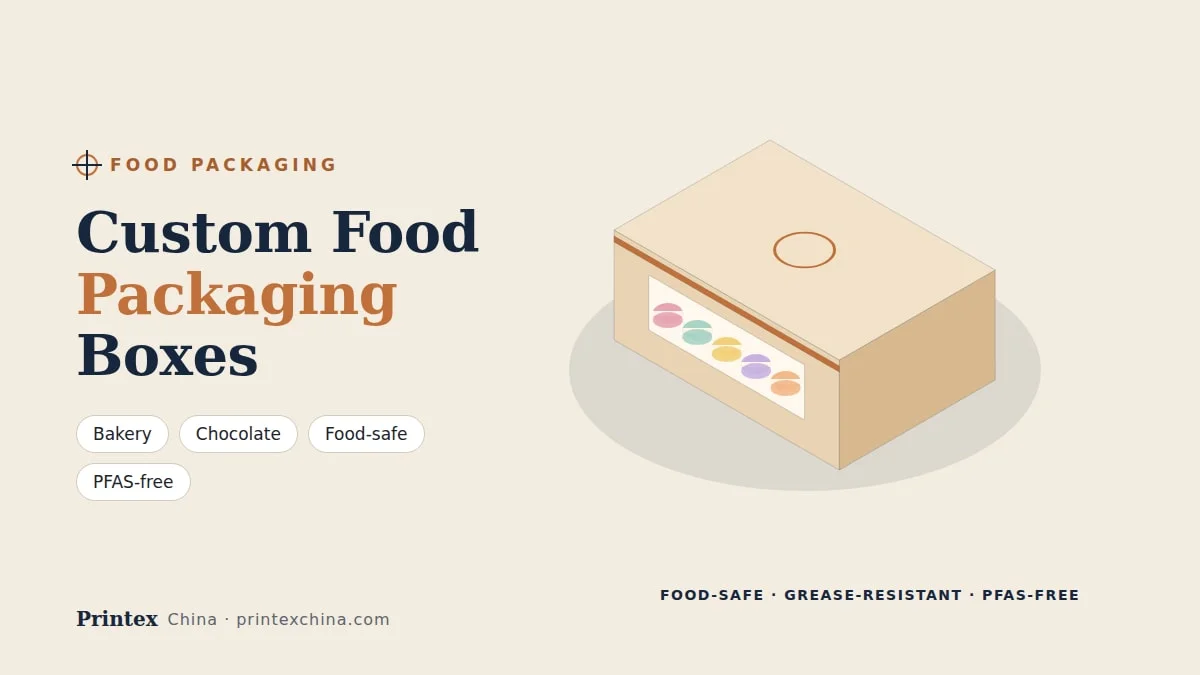
Folding cake and pastry boxes, often with a window, ship flat and assemble quickly at the counter. Lock-corner and four-corner glued styles erect in seconds. Window boxes show off cakes, cookies and macarons.
Clamshell and takeaway boxes
One-piece hinged boxes for burgers, sandwiches and street food. They are easy to close, stack well and are ideal for quick-service restaurants. See our food and bakery boxes.
Chocolate and confectionery boxes
Rigid lid-and-base boxes, drawer boxes and folding cartons with paperboard dividers or trays for individual pieces. Premium chocolate brands often use two-piece rigid boxes with a printed sleeve. See our chocolate boxes.
Tea, coffee and dry goods
Folding cartons and paper tubes for tea, coffee, spices and snacks. These products are usually packed in an inner bag or pouch first, so the box focuses on branding and protection. See our tea and coffee boxes.
Gift hampers and food gift sets
Rigid or magnetic boxes with inserts for jars, bottles and treats. They are popular for corporate gifting and holiday sales.
Direct vs Indirect Food Contact
The first question for any food box is whether the food touches the packaging directly.
- Direct contact: an unwrapped cookie, cake, burger or chocolate sitting on the board. The material, inks and coatings on the food-contact side must be suitable for food contact.
- Indirect contact: the food is already in a bag, wrapper, tray or liner. Requirements for the outer box are usually less strict, but the inner packaging must be food-safe.
Many brands avoid complexity by using a food-safe inner liner, glassine paper or tray, and keeping the decorated outer box for branding.
Choosing Food-Safe Materials
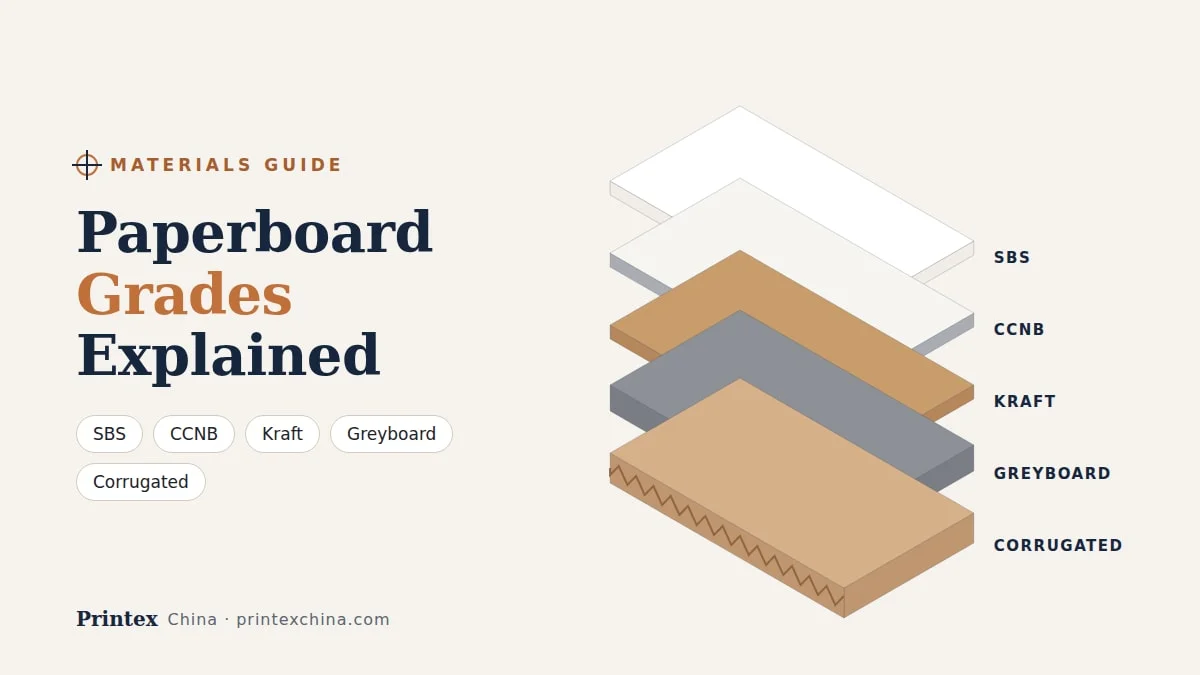
- Food-grade virgin paperboard (such as SBS or FBB): the usual choice for direct contact, as it avoids contaminants that can occur in recycled fibre.
- Recycled board: suitable for outer boxes and indirect contact. For direct contact, use a functional barrier or liner, and check suitability with your supplier.
- Kraft board: strong and natural. Food-grade versions are widely used for takeaway and bakery packaging.
- Grease and moisture barriers: oily or moist foods need a barrier coating or liner so grease does not soak through the board.
Barrier Coatings and the PFAS Question
For years, some grease-resistant food packaging relied on PFAS (per- and polyfluoroalkyl substances). These "forever chemicals" are now being phased out worldwide:
- European Union: under the Packaging and Packaging Waste Regulation (PPWR), food-contact packaging containing PFAS above set limits can no longer be placed on the EU market from 12 August 2026.
- United States: in 2024 the FDA announced that grease-proofing substances containing PFAS are no longer being sold for food-contact use in the US market, and a number of states have passed their own restrictions on PFAS in food packaging.
The good news is that PFAS-free alternatives are widely available: water-based barrier coatings, grease-resistant papers, glassine liners and plant-based films. When you request a quote, specify that food-contact packaging must be PFAS-free and ask for the supporting documentation.
Inks, Coatings and Food Safety
- Low-migration inks and coatings are recommended for food packaging, especially on surfaces that may touch food or where set-off from the printed side is possible.
- Avoid printing on the food-contact side where possible, or use inks and varnishes suitable for that use.
- Water-based coatings protect the print and are often preferable to plastic film lamination for food and recyclability.
Food-Contact Regulations: An Overview
Food-contact rules differ by market. As a general overview:
- EU: Regulation (EC) No 1935/2004 sets the general requirements that food-contact materials must not transfer substances to food in amounts that could endanger health or change the food unacceptably. Good manufacturing practice is covered by Regulation (EC) No 2023/2006, and national rules may apply to paper and board.
- United States: paper and paperboard food-contact components are regulated by the FDA under Title 21 of the Code of Federal Regulations, including provisions specific to paper and board.
- Other markets have their own requirements, and retailers often add their own.
Important: compliance depends on the specific food, contact conditions (temperature, duration, fat content) and market. Ask your packaging supplier for material declarations and work with a compliance specialist for your products.
Designing Food Packaging That Sells
- Show the product: windows or clear photography make food irresistible. Consider film-free windows for easier recycling.
- Think about the handover: bakery boxes should erect quickly and close securely, and takeaway boxes should stack and carry well.
- Leave space for labels: ingredients, allergens, best-before dates and batch codes are often printed or labeled per batch.
- Design for the season: sleeves and stickers let you refresh designs for holidays without new boxes.
- Make it giftable: for chocolates and premium foods, finishes such as foil and embossing add perceived value. See our finishes guide.
Food Packaging by Business Type
Bakeries and patisseries
Window cake boxes, cupcake boxes with inserts and cookie boxes that erect quickly at the counter. A single-color logo on kraft keeps costs low, while a printed window box builds the brand. Stock several sizes so one box family covers most orders.
Restaurants and quick-service brands
Clamshells, fry cartons and food trays with grease-resistant, PFAS-free barriers. Prioritize stackability, quick closing and simple branding that prints economically at high volume.
Chocolatiers and confectioners
Rigid or folding boxes with precise dividers, often with a printed sleeve per collection. Gold foil and embossing are common for gifting seasons, and inner trays should be food-safe where chocolates sit directly on them.
Specialty food and gift brands
Rigid gift boxes, magnetic boxes and tubes for tea, coffee, honey, sauces and hampers. The box often becomes part of the gift, so presentation and reusability matter most.
Protecting Food in Transit
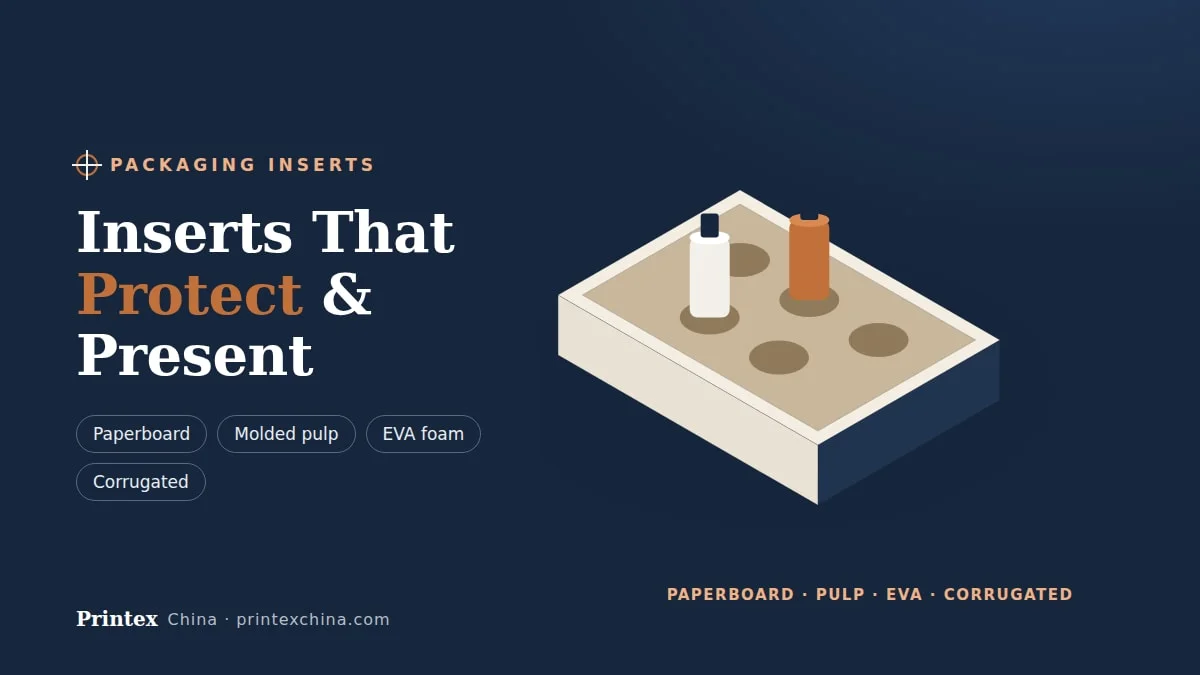
- Use dividers or trays so chocolates, macarons or cookies don't move and break.
- Choose sturdy boards or rigid boxes for heavier gift sets with jars or bottles.
- For e-commerce, pack food boxes inside a corrugated shipper with void fill, and consider temperature for chocolate in warm seasons.
Cost and MOQ
Folding food boxes and clamshells are very cost-effective at volume. Rigid chocolate and gift boxes cost more but suit premium products. Our standard MOQ is 500 units per design for offset printing, with digital printing available for shorter runs. For details on timelines and shipping, see our buyer's guide.
Frequently Asked Questions
Can food touch the printed box directly?
Only if the material, inks and coatings on the contact side are suitable for food contact. Many brands use a food-safe liner or tray to keep things simple.
Can you make PFAS-free grease-resistant boxes?
Yes. We offer PFAS-free options such as water-based barrier coatings and grease-resistant liners. Please specify your requirements when you request a quote.
Are recycled boards safe for food packaging?
Recycled board is suitable for outer packaging and indirect contact. For direct contact, food-grade virgin board or a functional barrier is usually recommended.
Do you make chocolate boxes with inserts?
Yes. We make folding and rigid chocolate boxes with paperboard dividers and trays sized to your pieces.
Start Your Food Packaging Project
Tell us what you are packing, whether it touches the box directly and which markets you sell in. Printex China will recommend food-grade materials, barrier options and structures, and provide samples so you can test fit, freshness and presentation.