Custom Cosmetic Packaging: A Brand Guide to Boxes, Materials & Labeling
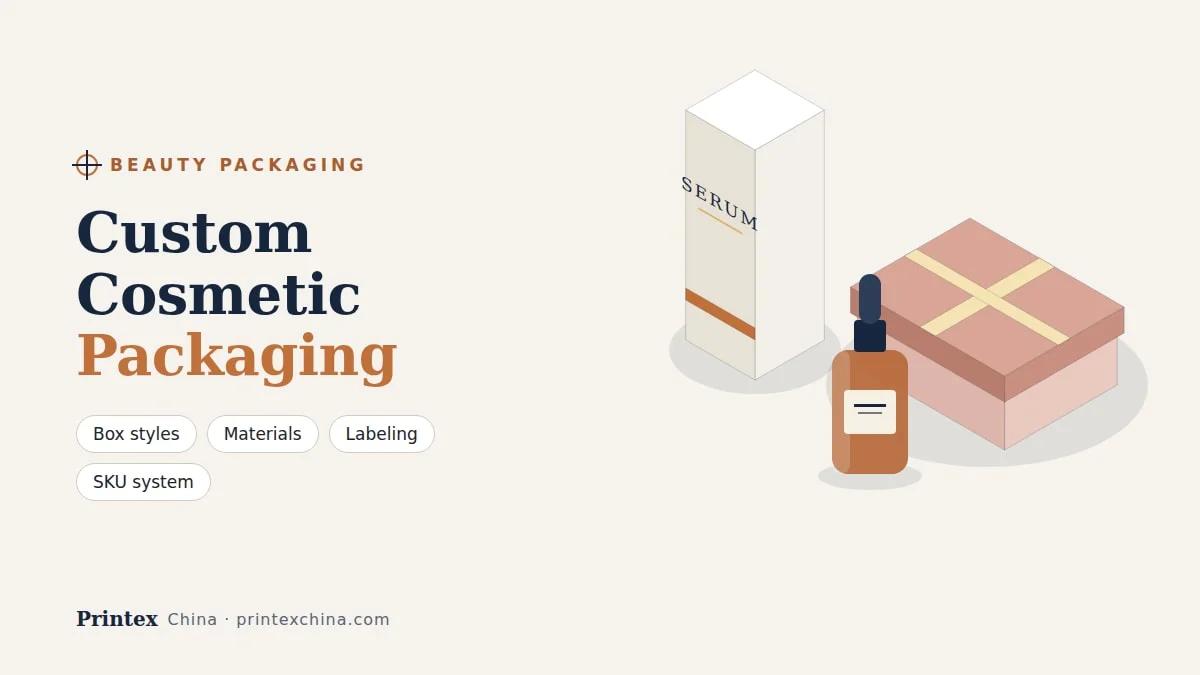
In beauty, the box often sells before the product does. Customers judge a serum, a palette or a fragrance by its packaging on the shelf, in an Instagram post or in the first seconds of an unboxing. Cosmetic packaging also has to carry regulatory information, protect fragile glass and fit a brand system that may span dozens of SKUs.
This guide walks beauty brands through the main decisions for custom cosmetic boxes: structures by product type, materials, finishes, inserts, labeling content, and how to plan a packaging range that scales.
Quick answer: Most cosmetic brands use printed folding cartons for individual products on shelf, and rigid or magnetic boxes for gift sets, launches and PR kits. Choose SBS or FSC-certified white board for color accuracy, add one signature finish (foil, soft-touch or embossing), and plan a consistent design system across all SKUs.
Choosing the Right Box for Each Cosmetic Product
Skincare: serums, creams and treatments
Dropper bottles and jars usually ship in a reverse or straight tuck-end folding carton, often with a paperboard insert to stop the bottle moving. Heavier glass jars benefit from an auto-lock bottom carton, which supports weight better than a tuck bottom.
Makeup: palettes, lipsticks and compacts
Slim sleeves and tuck boxes suit palettes and compacts. Lipsticks and mascaras use small tuck-end cartons, sometimes with a hanging tab for retail display. For limited editions, a sleeve over a printed tray creates an elegant slide-out reveal.
Fragrance
Perfume is the category where packaging carries the most weight. Premium lines typically use rigid boxes (lid and base, shoulder-neck or magnetic) with a fitted insert that holds the bottle and cap securely. Mass-market fragrance often uses thick folding cartons with a die-cut insert. See our perfume boxes.
Hair and body care
Tubes, pumps and bottles often go without an outer carton on mass retail shelves. Premium and gift lines use folding cartons or two-piece boxes. Bath bombs and soaps use window cartons, kraft boxes or compartment boxes. See our bath bomb boxes.
Gift sets, launches and PR kits
This is where magnetic closure boxes and two-piece rigid boxes shine. They hold multiple products in a custom insert and create the unboxing moment influencers want to share.
Materials: Getting the Color and Feel Right
- SBS / C1S white board (typically 300–400 gsm): the standard for cosmetics. Its bright white surface reproduces brand colors and skin tones accurately.
- FSC-certified board: increasingly requested by retailers and conscious consumers, and available in the same grades. See our sustainable packaging guide.
- Kraft and uncoated stocks: natural, clean-beauty positioning. Expect softer, warmer colors.
- Metallic or holographic board: eye-catching for makeup and limited editions, printed with white ink underlay where solid colors are needed.
- Greyboard with specialty wrap papers: for rigid gift boxes. Textured, pearlescent or soft-touch papers give an instant luxury feel.
Finishes That Work in Beauty
Beauty packaging is handled, photographed and displayed, so finishing has an outsized impact. The most popular choices are:
- Soft-touch lamination: a velvety feel that signals premium quality the moment the box is picked up.
- Hot foil stamping: gold, rose gold, silver or holographic logos. It is a hallmark of beauty packaging.
- Embossing and debossing: tactile logos and patterns, beautiful when combined with foil.
- Spot UV: glossy highlights over matte, ideal for tone-on-tone designs.
- Pantone spot colors: essential when your brand color must match exactly across every SKU and print run.
Choose one signature effect and use it consistently across the range, rather than stacking several on each box. Our guide to packaging finishes explains how each one works and what it costs.
Inserts: Protecting Glass and Presenting Products
- Paperboard inserts: die-cut cradles that hold bottles and jars. They are recyclable and cost-effective.
- Molded pulp inserts: a protective, plastic-free option for sets and fragile items.
- EVA foam or flocked inserts: precise cavities for high-end fragrance and gift sets.
- Satin-lined inserts: a classic luxury look for perfume and jewelry-inspired beauty.
Design the insert together with the box, and test it with the real product. Bottle tolerances, pump heights and cap shapes vary more than spec sheets suggest.
What Information Goes on a Cosmetic Box?
When a product is sold in an outer carton, much of the mandatory consumer information is typically printed on that carton. Requirements depend on the market. As a general overview:
European Union
Under the EU Cosmetics Regulation (EC) No 1223/2009, labeling typically includes the name and address of the responsible person, nominal content, a date of minimum durability or period-after-opening (PAO) symbol, precautions for use, a batch number, the product's function if not obvious, and the ingredient list (INCI names). Some of these may appear on the outer packaging only.
United States
US cosmetic labeling rules require, among other things, an identity statement and net quantity on the principal display panel, an ingredient declaration, the name and place of business of the manufacturer, packer or distributor, and any required warnings. The Modernization of Cosmetics Regulation Act (MoCRA) added further requirements, such as contact information for adverse event reporting.
Important: your packaging manufacturer prints the information you supply. The regulatory content itself is the brand's responsibility, so always have the final artwork checked by a qualified regulatory consultant for each market you sell in.
Practical artwork tips for label content
- Reserve a dedicated back or side panel for regulatory text and keep it consistent across SKUs.
- Keep small text legible. Very fine serif fonts or reversed-out text on dark backgrounds can fill in during printing.
- Place barcodes on a light, flat panel with enough quiet zone around them, in dark ink on a light background.
- Leave space for a batch code and expiry date if they are printed or stamped on your filling line.
Building a Packaging System Across SKUs
Most beauty brands grow from a few products to many. Planning the system early saves money and keeps the shelf looking coherent.
- Standardize box sizes: group products into a few carton sizes and use inserts to fit different bottles.
- Use a color-coding system: one base design with a different accent color or band per product line or variant.
- Lock brand colors with Pantone references and approve a physical color standard to keep reprints consistent.
- Gang-run SKUs: printing several designs of the same size and material together shares setup costs.
- Plan for minimums: our standard offset MOQ is 500 units per design. Digital printing from around 250 units suits new launches and limited editions.
Seasonal Editions and Gift Sets
Holiday, Valentine's Day and Mother's Day editions drive a large share of beauty sales, and packaging is usually the main thing that changes. A few ways to make seasonal packaging efficient:
- Keep the structure, change the print: reuse existing dielines and inserts and refresh only the artwork.
- Use a seasonal sleeve over your standard carton, which is cheaper than a full redesign and easy to remove after the season.
- Choose digital printing for short runs so limited editions don't tie up cash in large minimums.
- Plan Q4 gift sets early: brief your packaging supplier in spring or early summer so samples, production and sea freight fit before retail deadlines.
Costs and Timelines
Folding cartons are the most cost-effective format for individual cosmetics. Rigid and magnetic boxes cost several times more per unit but are often justified for gift sets and premium lines. Finishing, inserts and quantity are the other main cost drivers. For a typical project, samples take 2–7 days after artwork approval and mass production 15–30 days, followed by shipping. Plan launches and holiday gift sets well ahead, because Q4 production capacity fills early. Our buyer's guide to MOQ, cost and lead time covers this in detail.
Common Mistakes Beauty Brands Make
- Approving colors on screen instead of on a physical proof.
- Designing the box before confirming the final bottle or jar dimensions.
- Using a tuck bottom for heavy glass, which can open under weight.
- Cramming regulatory text into too small a space, which hurts legibility and compliance.
- Creating a completely different design for each SKU, which increases cost and weakens shelf impact.
Frequently Asked Questions
What is the best box type for skincare products?
A tuck-end folding carton in SBS board with a paperboard insert is the most common and cost-effective choice. Use an auto-lock bottom for heavier glass jars.
Can you match our exact brand color?
Yes. Supply a Pantone reference and we will match it and control it against an approved physical sample using spectrophotometers during production.
Do you print ingredient lists and regulatory text?
Yes. We print all artwork you supply, including small regulatory text. Please have the content reviewed for compliance in your target markets before final approval.
What is the MOQ for custom cosmetic boxes?
Our standard MOQ is 500 units per design for offset printing, and digital printing supports runs from around 250 units.
Create Your Cosmetic Packaging
Send us your product dimensions, SKU list and brand guidelines. Printex China will recommend structures and materials for each product, help you build a consistent packaging system, and make physical samples so you can see and feel the result before production. Explore our cosmetic boxes to get started.