Sustainable Packaging Guide: FSC, Recycled Board & Plastic-Free Boxes
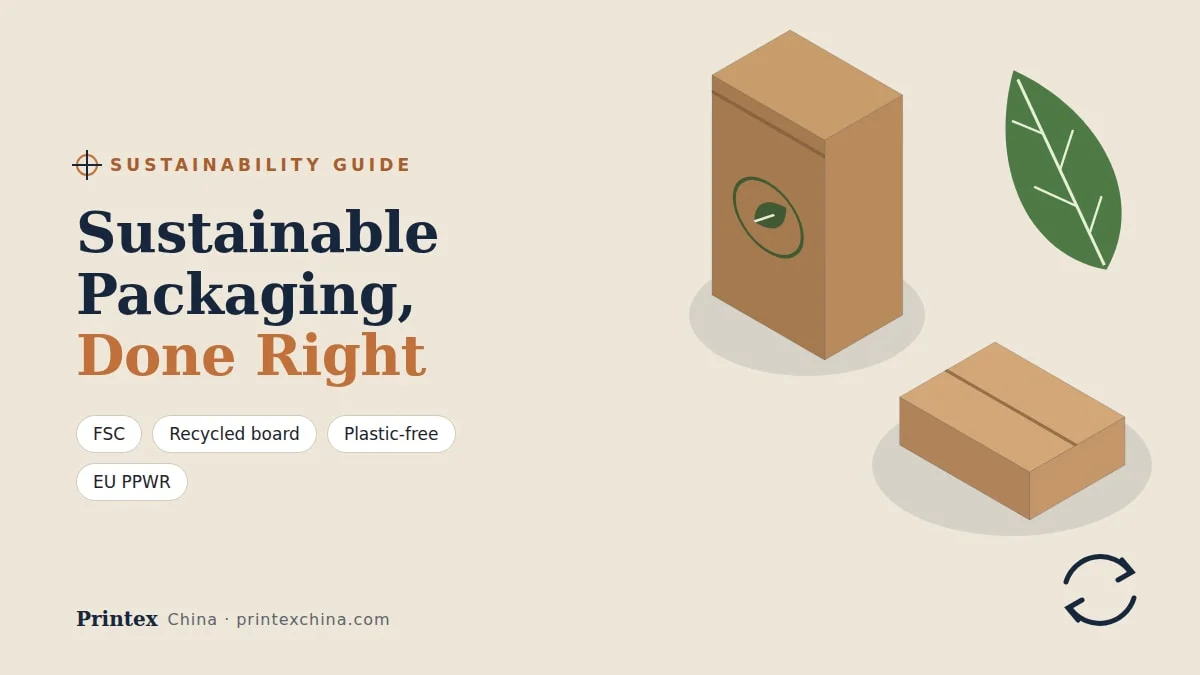
Sustainable packaging has moved from a marketing extra to a buying requirement. Retailers ask for FSC-certified materials, consumers notice plastic in the box, and new regulations in Europe and the United States are putting packaging design under legal scrutiny. The good news: paper-based packaging is already one of the easiest formats to make sustainable, if you make the right choices at the design stage.
This guide explains the materials, certifications, inks, coatings and design decisions that make custom boxes genuinely more sustainable. It also covers the claims you can and cannot make, and the regulations to watch.
What Makes a Paper Box "Sustainable"?
There is no single definition. In practice, buyers, retailers and regulators look at four things:
- Responsible sourcing: where the fibre comes from (certified forests, recycled content).
- Material efficiency: using no more material than the product needs.
- Recyclability: whether the box can easily be recycled where your customers live.
- Honest communication: clear, accurate claims on the pack and on your website.
Choosing Sustainable Materials
FSC-certified paperboard
The Forest Stewardship Council (FSC) certifies that wood fibre comes from responsibly managed forests, recycled material or a controlled mix. You will see three main FSC labels:
- FSC 100%: all fibre from FSC-certified forests.
- FSC Mix: a mixture of certified, recycled and controlled material. This is the most common label on packaging.
- FSC Recycled: made from recycled material.
Important: to print the FSC logo on your box, the packaging must be produced by a supplier with a valid FSC chain-of-custody certificate, and the label must be approved according to FSC's trademark rules. Ask your manufacturer to handle the label application. Printex China works with FSC-certified materials.
Recycled board
Recycled paperboard (for example, grey-back CCNB) and recycled corrugated board reduce the demand for virgin fibre. They are ideal for shipping boxes, inner cartons and cost-conscious retail packaging. Recycled board has a slightly less bright surface, so allow for this in your color expectations.
Kraft paper and board
Unbleached kraft has a natural brown look that customers instantly associate with eco-friendly packaging. It is strong, prints well with bold one- or two-color designs, and works beautifully with debossing and foil. See our corrugated mailers and folding cartons, both available in kraft.
Plastic-Free Packaging: Where Plastic Hides in a Paper Box
Many "paper" boxes contain more plastic than you might think. These are the usual suspects, and the alternatives:
- Film lamination → switch to a water-based (aqueous) coating or varnish. If you need scuff resistance, ask about lighter or alternative film options.
- PVC or PET windows → use an open die-cut window, or a window made from a plant-based or paper film.
- EVA or PE foam inserts → use paperboard, corrugated or molded pulp inserts.
- Plastic bags and bubble wrap → use tissue paper, honeycomb paper or paper void fill.
- Plastic tape → use paper tape or self-locking box structures that need no tape.
Going fully plastic-free is not always necessary or practical, but removing the easy wins can make your packaging mono-material (paper only), which is the simplest format to recycle.
Inks and Coatings
- Vegetable- or soy-based inks: widely used in offset printing and help with de-inking during recycling.
- Water-based coatings: protect the print without a plastic film.
- Less ink coverage: a design with generous unprinted areas, especially on kraft, uses less ink and often looks more premium.
- Foil and spot UV: used as small accents, they are generally compatible with paper recycling. Large foil areas are best avoided if recyclability is a key claim.
Design for Less Material
The most sustainable box is the one that is the right size. Oversized packaging wastes board, void fill and freight space, and it is now being regulated (see below).
- Right-size your boxes to the product, with just enough clearance for the insert.
- Choose flat-shipping structures: folding cartons, mailers and collapsible rigid boxes reduce freight volume and emissions.
- Reduce components: a well-designed insert can replace void fill, and a printed interior can replace a separate leaflet.
- Standardize sizes across SKUs to reduce waste from overproduction.
- Design for reuse: sturdy rigid boxes are often kept and reused by customers, extending their life.
Sustainable Options by Industry
- Food and bakery: uncoated or water-based-coated board, film-free windows and food-safe inks. Check food-contact requirements for your market. See food and bakery boxes.
- Cosmetics and skincare: FSC-certified folding cartons with a single foil accent instead of full lamination, and paperboard inserts instead of plastic trays. See cosmetic boxes.
- Candles and home fragrance: kraft or uncoated stocks with debossed logos. They are a natural fit for eco-positioned brands. See candle boxes.
- Apparel and e-commerce: recycled corrugated mailers with inside printing and paper tissue, no poly bags. See apparel boxes.
- Electronics: molded pulp or corrugated inserts instead of foam, and mono-material rigid or folding boxes.
Questions to Ask Your Packaging Manufacturer
- Can you supply FSC-certified or recycled board for this specification, and handle the FSC label approval?
- What water-based or alternative coatings do you offer, and how do they perform on scuff resistance?
- Can the insert be made from paperboard, corrugated or molded pulp instead of foam?
- Can the box be redesigned to use less board or ship flat without losing protection?
- Can you provide material specifications and certificates for our retailer or compliance team?
Regulations to Watch
Packaging rules are tightening. The two main developments for exporters to Europe and the United States are:
EU Packaging and Packaging Waste Regulation (PPWR)
The PPWR entered into force in February 2025 and has applied across the EU since 12 August 2026, with requirements phased in over the following years. Key provisions include:
- Recyclability: from 2030, packaging placed on the EU market must be designed for recycling, with stricter recyclability grades phased in later.
- Empty space: from 2030, a maximum empty space ratio of 50% applies to grouped, transport and e-commerce packaging.
- Minimisation: from 2030, packaging weight and volume must be reduced to the minimum necessary for its function.
- Harmonised labelling: an EU-wide label showing material composition, expected from 2028.
- Authorised representative: non-EU producers selling directly into the EU need to appoint a representative in the EU.
Extended Producer Responsibility (EPR) in the United States
Several US states, including California, Oregon, Colorado and Maine, have passed EPR laws for packaging. They require brands to register, report packaging volumes and pay fees that are often lower for recyclable packaging.
Regulations change and apply differently depending on your role and market. Always confirm your obligations with a qualified compliance advisor.
Making Honest Sustainability Claims
Vague claims like "eco-friendly" or "green" are increasingly challenged by regulators and consumers. Keep claims specific and provable:
- Say what is sustainable: "Box made from FSC-certified paperboard" rather than "eco-friendly box".
- Say how to dispose of it: "Recycle with paper" helps customers and supports your recyclability claim.
- Only claim "plastic-free" if every component is plastic-free, including windows, coatings and tape.
- Keep documentation from your supplier, such as material specifications and FSC certificates, in case a retailer or regulator asks.
Does Sustainable Packaging Cost More?
Not necessarily. Some choices cost more, such as molded pulp inserts versus basic foam in some sizes, or specialty recycled papers. Others save money: right-sizing reduces board and freight, removing lamination removes a process step, and mono-material designs simplify production. The best approach is to ask your manufacturer to quote your current specification and a sustainable alternative side by side. For more on cost drivers, see our buyer's guide to MOQ, cost and lead time.
A Quick Sustainable Packaging Checklist
- Specify FSC-certified or recycled board.
- Right-size the box and insert.
- Replace film lamination with a water-based coating where possible.
- Replace plastic windows, foam and void fill with paper-based alternatives.
- Choose a flat-shipping structure.
- Add clear disposal instructions to the box.
- Keep supplier documentation for every claim.
Frequently Asked Questions
Is kraft packaging more sustainable than white board?
Kraft is unbleached, which saves a processing step, and it often contains recycled fibre. However, white board can also be FSC-certified or recycled. The certification and overall design matter more than the color.
Can a laminated box be recycled?
Many paper recycling mills can process boxes with a thin laminate, but it depends on local facilities. If recyclability is a key claim, a water-based coating is the safer choice.
Can I put the FSC logo on my packaging?
Yes, if the packaging is produced from FSC-certified material by a supplier with a valid chain-of-custody certificate, and the label is approved under FSC's trademark rules. Your manufacturer can guide you through this process.
What is the most eco-friendly insert?
Paperboard and molded pulp inserts are fully paper-based and recyclable, making them the most common sustainable alternatives to plastic foam.
Build a More Sustainable Box
Tell us about your product and your sustainability goals. Printex China will suggest FSC-certified or recycled materials, plastic-free structures and right-sized designs, and quote your current packaging alongside a greener alternative so you can see the difference in cost and impact.