Packaging Finishes Explained: Foil Stamping, Spot UV, Embossing & Soft-Touch
Two boxes can share the same structure, size and artwork and still feel completely different in a customer's hands. The difference is finishing: the coatings, foils and textures applied after printing. The right finish makes a box feel premium, protects the print from scuffs and draws the eye on a crowded shelf. Too many finishes, or the wrong combination, add cost without adding value.
This guide explains the most popular packaging finishes, how each one works, when to use it, how it affects cost, and which combinations work best together.
Lamination: The Foundation Layer
Lamination is a thin plastic or bio-based film bonded to the printed sheet. It protects against scuffing, moisture and fingerprints, and it sets the base "feel" of the box. Most other finishes are applied on top of it.
Gloss lamination
Gloss lamination creates a shiny, reflective surface that makes colors look deeper and more saturated. It works well for vibrant consumer products and food packaging, but it shows fingerprints and glare more easily.
Matte lamination
Matte lamination gives a smooth, non-reflective surface with an understated, modern look. It is a popular choice for skincare, tech and minimalist brands, and an ideal base for spot UV contrast.
Soft-touch (velvet) lamination
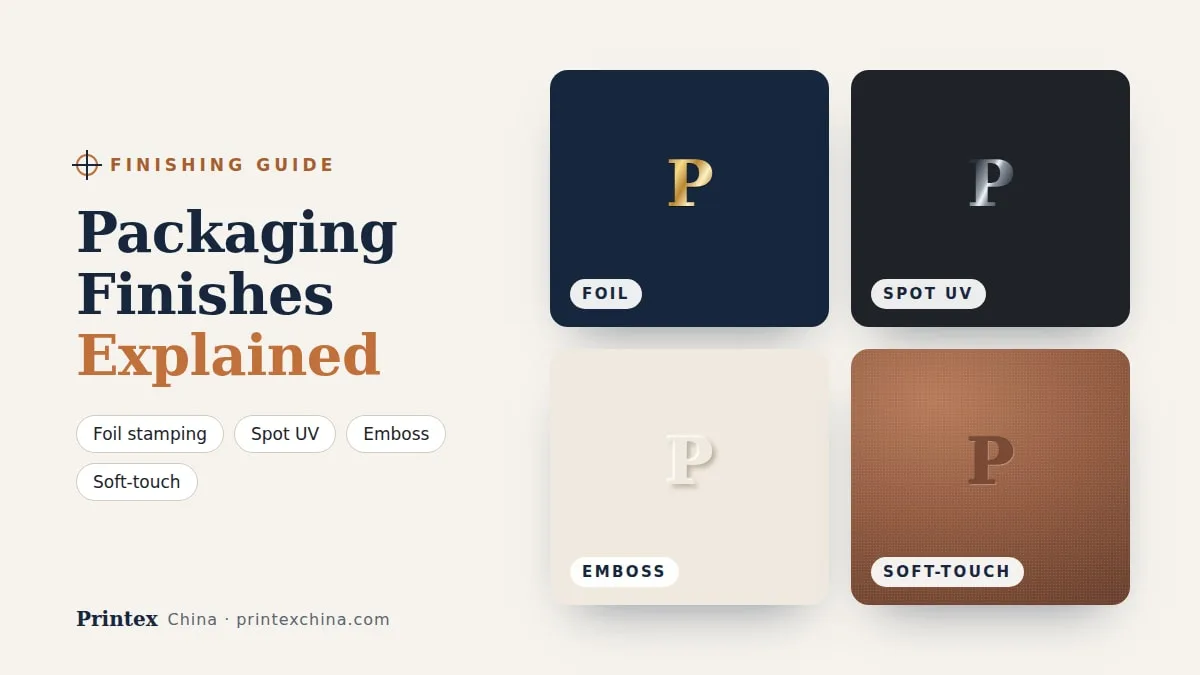
Soft-touch lamination is a matte film with a velvety, almost suede-like feel. It creates an immediate premium impression the moment the box is picked up, which is why it is common for cosmetics, fragrance and luxury gifts. It costs more than standard matte and can show scuffs on dark colors, so it is often combined with foil or spot UV for contrast.
Sustainability note: if plastic-free packaging is a priority, ask about water-based coatings or aqueous varnish instead of film lamination. They offer lighter protection but make paper recycling simpler.
Foil Stamping (Hot Foil)
Foil stamping uses a heated metal die to transfer a thin metallic or pigmented foil onto the box surface. It is the classic way to add gold, silver, rose gold, copper or holographic accents to logos, patterns and borders.
- Best for: logos, brand names, fine borders and small graphic highlights on premium packaging.
- Design tips: avoid extremely thin lines and tiny text, which can fill in or break. Keep a sensible minimum line weight and supply foil areas as a separate vector layer.
- Cost: requires a foil die (a one-time tooling cost per design) plus a process step. Large solid foil areas cost more and are harder to keep perfectly even.
- Watch out: foil on soft-touch laminate needs a compatible foil. Your manufacturer should test this on the sample.
Spot UV
Spot UV is a clear, high-gloss coating applied only to selected areas and cured instantly with ultraviolet light. Applied over matte or soft-touch lamination, it creates a striking shine-versus-matte contrast that catches the light as the box moves.
- Best for: highlighting a logo, product image or pattern without adding color. Tone-on-tone designs on dark packaging look especially refined.
- Variations: raised (3D or thick) spot UV adds noticeable texture. Textured UV can mimic sand, leather or other surfaces.
- Design tips: supply spot UV as a separate 100% K layer that aligns precisely with printed elements. Allow for small registration tolerances on very fine details.
Embossing and Debossing
Embossing presses the board from behind to create a raised design. Debossing presses from the front to create a recessed design. Both add tactile depth that people instinctively touch, which makes them a great way to make a logo memorable.
- Blind emboss/deboss: no ink or foil, only texture, for an elegant, minimalist result.
- Registered emboss: the raised area aligns with printed artwork or foil.
- Foil + emboss combination: a raised, metallic logo, one of the most premium looks in packaging.
- Material matters: thicker boards and the wrap paper on rigid boxes hold detail beautifully. Very fine detail may soften on thin board.
- Cost: requires a pair of dies (male and female). The cost is mostly fixed, so it becomes very affordable per unit at volume.
Other Finishes Worth Knowing
- Aqueous coating / varnish: a low-cost protective layer, often used on corrugated and food packaging.
- Pantone spot colors and metallic inks: for exact brand colors, or a metallic effect without foil tooling.
- Specialty papers (rigid boxes): textured, linen-feel, pearlescent or colored-through wrap papers create luxury with minimal printing.
- Window patching: a die-cut window, with or without film, that lets the product sell itself. Consider film-free windows for recyclability.
- Inside printing: a printed interior or message revealed on opening, which is powerful for unboxing and social sharing.
How Finishes Are Applied: The Production Sequence
Understanding the order of operations helps you design artwork that finishes cleanly and explains why some combinations need extra testing. A typical sequence for a printed paperboard box is:
- Printing: CMYK and any Pantone spot colors are printed on the press sheet.
- Lamination or coating: gloss, matte or soft-touch film, or an aqueous coating, is applied once the inks are fully dry.
- Spot UV: the selective gloss coating is screen-printed or applied in register over the laminate and UV-cured.
- Foil stamping: the heated die transfers foil onto the laminated surface.
- Embossing or debossing: the board is pressed between matched dies, often in register with foil or print.
- Die-cutting, gluing and assembly: the sheet is cut to the dieline, creased, glued and, for rigid boxes, wrapped around the board.
Because each step must align with the previous one, precise registration matters. This is one reason a physical pre-production sample is essential when you combine several effects.
Durability: Will the Finish Survive Shipping?
Packaging rarely travels alone. It rubs against shipping cartons, other boxes and conveyor belts. Keep these points in mind:
- Dark soft-touch surfaces can show scuff marks. Ship them in polybags or with interleaving sheets, and consider a scuff-resistant soft-touch film.
- Crease lines on heavily laminated or thick board can crack. Correct crease depth and board direction prevent this, and your manufacturer should check it on the white dummy.
- Large foil areas can scratch. Keep them on panels less exposed to rubbing, or protect them in the outer packing.
- Unlaminated boxes absorb moisture and fingerprints. For humid destinations or long sea freight, some form of coating is strongly recommended.
For premium presentation that also survives transit, many brands pair a finished retail box with a plain corrugated shipper, or choose a sturdier rigid box.
Finishing Combinations That Work
- Soft-touch + gold foil logo: the go-to luxury combination for cosmetics, fragrance and jewelry.
- Matte lamination + spot UV: a modern, high-contrast look at moderate cost, great for tech and skincare.
- Blind deboss on kraft or uncoated stock: natural, eco-positioned and elegant, well suited to candles, tea and artisan goods.
- Foil + emboss on a rigid box: maximum impact for gift sets, premium spirits and limited editions.
- Gloss lamination + full-color print: bold, vibrant and durable for mass retail and confectionery.
Less is often more: two well-chosen finishes usually look more premium than four competing ones. Choose one "hero" effect, such as the logo, and let the rest of the design support it.
Matching Finishes to Your Industry
- Cosmetics and skincare: soft-touch or matte with foil or spot UV. See cosmetic boxes.
- Fragrance: rigid boxes with specialty paper, foil and emboss. See perfume boxes.
- Candles and home fragrance: uncoated or kraft stocks with deboss or a single foil color. See candle boxes.
- Chocolate and confectionery: gloss or matte with foil for seasonal editions. See chocolate boxes.
- Electronics: matte black with spot UV product imagery and a silver foil logo.
- Apparel and e-commerce: printed interiors and a single-color exterior on corrugated mailers.
How Finishing Affects Cost and Lead Time
Each finish is an extra pass through a machine, and some need tooling. As a guide:
- Lower cost: aqueous coating, gloss or matte lamination.
- Moderate: soft-touch lamination, spot UV, single-area foil.
- Higher: multiple foils, large foil areas, registered emboss, raised or textured UV, and combinations of several effects.
Tooling for foil and emboss is a mostly fixed cost, so these finishes become far more economical per unit as quantity increases. Complex finishing can add a few days to production, so factor it into your launch timeline. Our buyer's guide to MOQ, cost and lead time covers this in detail.
Preparing Artwork for Finishes
- Place each finish (foil, spot UV, emboss) on its own named layer in your Illustrator or PDF file.
- Use solid vector shapes (100% K) for finish areas. No gradients or transparency.
- Specify the foil color and type (for example, "matte gold" or "holographic silver").
- Keep fine lines and small text within the minimum sizes your manufacturer recommends.
- Always approve a physical sample, since finishes cannot be judged accurately on screen.
Frequently Asked Questions
What is the most premium packaging finish?
Soft-touch lamination combined with foil stamping and embossing is widely regarded as the most premium combination, especially on a rigid box wrapped in specialty paper.
Is soft-touch lamination worth the extra cost?
For products where first touch matters, such as beauty, fragrance, luxury gifts and tech, yes. It changes how customers perceive quality in the first second of handling.
Can finishes be applied to kraft or recycled board?
Yes. Foil stamping and debossing work well on kraft and uncoated stocks and suit natural or eco-positioned brands. Colors print differently on brown board, so test with a sample.
Are these finishes recyclable?
Paper boxes with foil or UV accents are generally accepted in paper recycling streams, though rules vary by region. For the most recyclable result, choose aqueous coatings instead of film lamination and avoid plastic windows.
Find the Right Finish for Your Box
Not sure which finish fits your brand and budget? Send us your artwork or a reference photo. Printex China's team will recommend a finishing combination, show you options on a physical sample and quote each option so you can see exactly what every effect adds. Explore our packaging styles to get started.