Custom Mailer Boxes for E-commerce: Flutes, Sizing, Printing & Cost
For e-commerce brands, the mailer box is where the customer relationship becomes physical. It has to survive parcel networks, stay within courier size and weight limits, and still deliver an unboxing moment worth sharing. Custom printed mailer boxes do all three, provided they are specified correctly.
This guide covers everything you need to design and order custom mailer boxes: structures, corrugated flute types, board strength, sizing, printing methods, inserts and the cost trade-offs behind each decision.
What Is a Mailer Box?
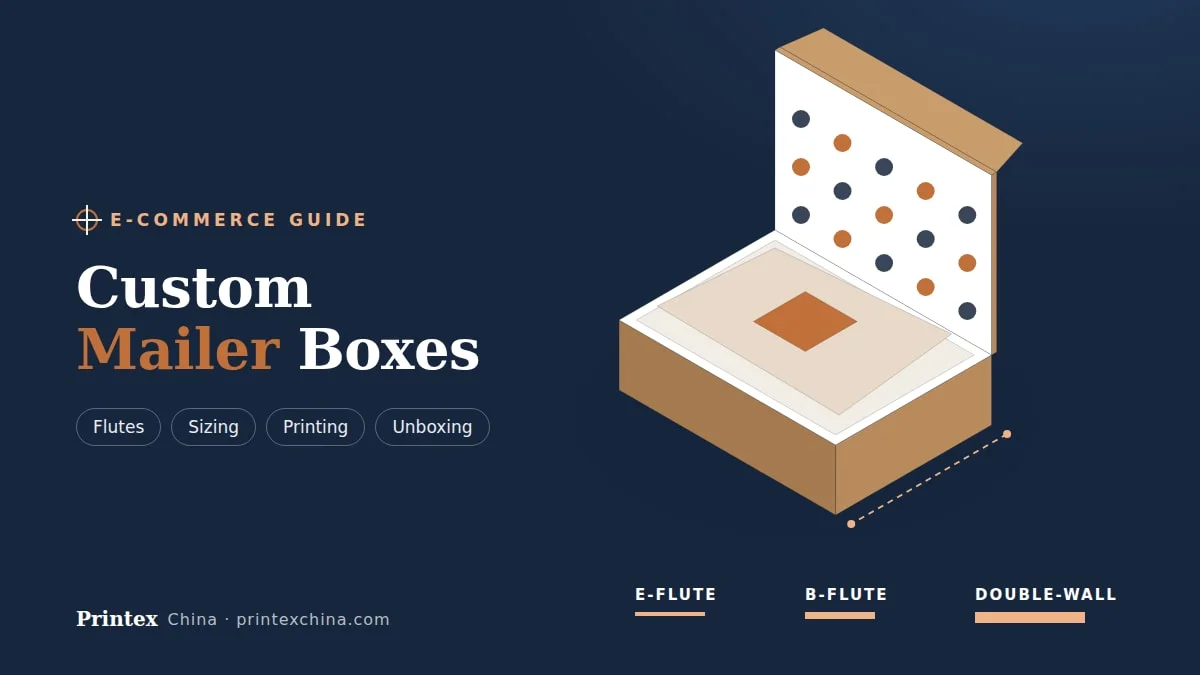
A mailer box is a one-piece, die-cut corrugated box with a hinged lid that tucks into the front. The most common style is the roll end tuck front (RETF) mailer, which has double-thick side walls from folded-in panels, dust flaps and a front tuck that locks the lid without tape. Mailers ship flat, erect in seconds and are strong enough to go through the mail on their own, with no outer shipper needed.
Explore our corrugated mailers and mailer and e-commerce boxes.
Common Mailer Box Styles
- Roll end tuck front (RETF): the classic e-commerce mailer with a secure tuck lid and neat folded walls. It is ideal for subscription boxes, apparel and cosmetics.
- Mailer with ear locks: adds side locking tabs for extra security on heavier products.
- Mailer with tear strip: the box is sealed with adhesive and opened with a zip-style tear strip. It is tamper-evident, quick to pack and easy for the customer to open.
- Mailer with peel-and-seal strip: pre-applied adhesive that removes the need for tape and supports return shipping when a second strip is added.
- Shipping boxes (RSC): standard four-flap cartons for larger or heavier orders, often used as outer shippers.
Corrugated Board Explained: Flutes and Walls
Corrugated board is made from a wavy inner layer (the flute) glued between flat liners. The flute size determines thickness, cushioning and print surface.
- F-flute (about 0.8 mm): very thin with an excellent print surface. It suits small, light, premium mailers.
- E-flute (about 1.5 mm): the most popular choice for e-commerce mailers. It combines a smooth surface for printing with good crush resistance.
- B-flute (about 3 mm): more cushioning and stacking strength, and suits heavier products or larger boxes.
- C-flute (about 4 mm): common for shipping cartons and outer boxes.
- Double-wall (for example, EB or BC): two flute layers for heavy, fragile or high-value shipments.
Liner options
- Kraft liner: natural brown, strong and cost-effective, and associated with eco-friendly brands.
- White liner: a clean base for bright, full-color printing.
- Coated white or laminated printed paper (litho-lam): for photographic, retail-quality graphics.
Board strength
Corrugated strength is often specified by Edge Crush Test (ECT) or burst strength ratings. For most single-wall e-commerce mailers carrying products up to a few kilograms, a standard-strength board is sufficient. Tell your manufacturer the product weight and how the parcel will travel, and they will recommend the right grade.
How to Size Your Mailer Box
Getting the size right saves money twice: less board, and lower shipping costs.
- Measure the product (or the product plus insert) at its largest points: length × width × height.
- Add a small clearance, usually a few millimetres per side, so the product fits without force but cannot move. Allow more if you use tissue paper or an insert.
- Specify inner dimensions when you request a quote. Manufacturers build the dieline from internal measurements.
- Check dimensional weight: couriers such as UPS, FedEx and DHL charge by the greater of actual weight and dimensional (volumetric) weight. Trimming a centimetre from the box height can move a parcel into a cheaper price band.
- Consider regulations: in the EU, e-commerce packaging will be subject to a maximum empty-space ratio from 2030. Right-sizing now avoids redesign later. See our sustainable packaging guide.
Printing Options for Mailer Boxes
Flexographic printing
Flexographic printing prints directly onto corrugated board with flexible plates. It is cost-effective for large runs of simple designs such as one- to three-color logos, patterns and text, especially on kraft.
Offset litho-lamination
The artwork is offset-printed on paper and then laminated onto corrugated board. This gives the highest print quality, including photographic images, fine detail, and Pantone and metallic effects, and it accepts premium finishes such as foil and spot UV.
Digital printing
Digital printing needs no plates, so it suits short runs, multiple designs, seasonal editions and market tests. Full-color printing is possible on both kraft and white board.
Inside printing
Printing the inside of the lid and walls is one of the most effective ways to create a memorable unboxing. A simple one-color pattern or a "hello" message on the inside lid often has more impact than an elaborate exterior. It also lets you keep a plainer, more discreet outside for shipping.
Inserts and Unboxing Details
- Corrugated or paperboard inserts: hold products in position and prevent movement in transit.
- Tissue paper and stickers: branded tissue with a logo sticker adds a premium layer at low cost.
- Printed cards: thank-you notes, usage instructions, discount codes for the next order or social media prompts.
- Crinkle paper or honeycomb paper: plastic-free void fill for gift sets.
For apparel brands, a printed mailer plus tissue is often the perfect balance of cost and experience. See our apparel boxes.
Artwork Tips for Mailer Boxes
- Design on the dieline: mailers have many panels and folds. Place the logo on the lid top and keep text away from creases and the tuck flap.
- Think in 3D: patterns that wrap across panels should be checked on a folded sample or 3D mock-up, because the side walls are double-thick and folded.
- Plan for kraft: colors print darker and less saturated on brown board. White ink underneath, or bold dark colors, work best.
- Use the inside lid for your brand message and the outside for a clean, discreet logo, which also helps reduce parcel theft for high-value goods.
- Supply vector files (AI or PDF) with Pantone references for brand colors and 3 mm bleed.
Test Before You Scale
Before mass production, test the sample the way your parcels will travel. Pack it with the real product, tape or seal it as you would in fulfilment, and do simple drop tests on corners, edges and faces. If you ship heavy or fragile items, ask about standardized transit testing (for example, ISTA-style procedures). A few extra days of testing costs far less than a wave of damaged deliveries and returns.
What Affects Mailer Box Cost?
- Size and flute: larger boxes and thicker or double-wall board use more material.
- Printing method and coverage: a one-color flexo logo on kraft is far cheaper than full-bleed litho-lam.
- Inside printing: printing both sides adds a pass but is often worth it.
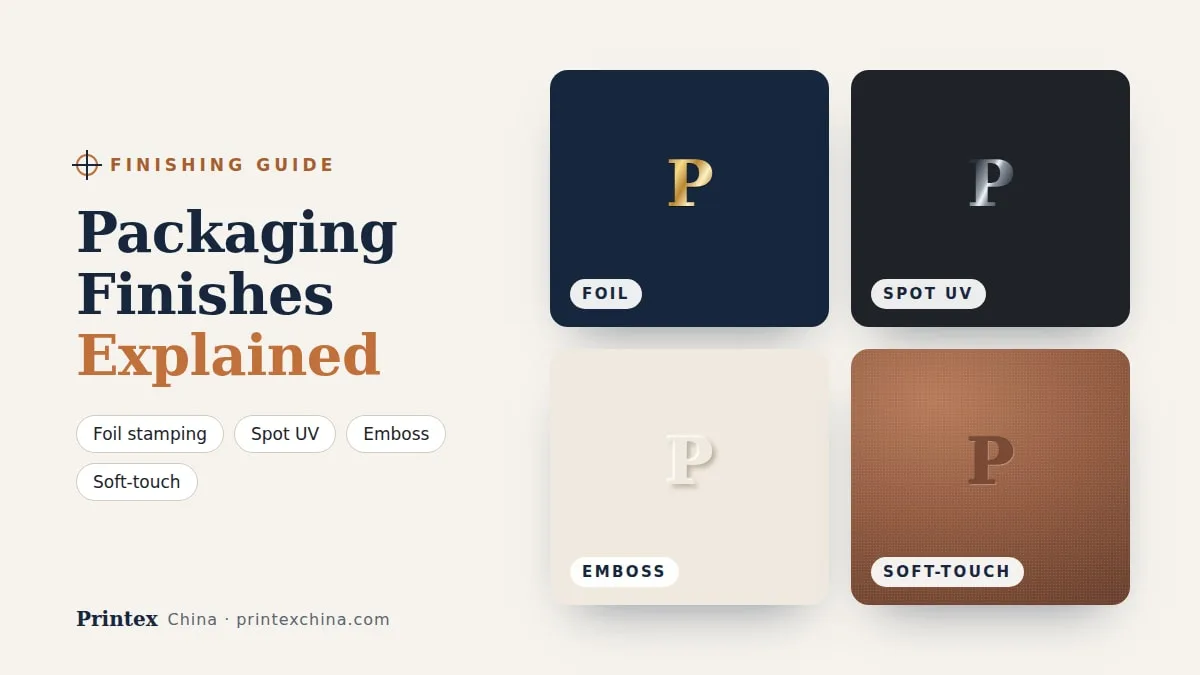
- Finishing: coating, lamination, foil or spot UV (with litho-lam).
- Features: tear strips, adhesive strips and inserts.
- Quantity: unit prices fall steeply as quantity rises. Digital printing keeps small runs affordable.
For MOQ, timelines and shipping terms, see our guide to sourcing custom packaging from China.
Mailer Boxes vs Other Formats
- Mailer vs poly mailer bag: a box protects better, stacks well and creates a much stronger brand experience. Bags are cheaper and lighter for soft goods.
- Mailer vs rigid box in a shipper: a rigid box feels more luxurious but needs an outer carton and ships assembled. A mailer is its own shipper and ships flat. Read our rigid box vs folding carton comparison for more on the trade-offs.
- Mailer vs plain brown carton: a printed mailer turns every delivery into a branded touchpoint for a modest additional cost.
Common Mistakes to Avoid
- Sizing by outer dimensions instead of inner dimensions.
- Choosing board that is too light for the product weight, causing crushed corners in transit.
- Placing important artwork across fold lines or the tuck flap.
- Ignoring dimensional weight when choosing box height.
- Skipping a physical sample to test the fit, closure and drop performance.
Frequently Asked Questions
What is the best flute for mailer boxes?
E-flute is the most common choice for e-commerce mailers because it balances print quality, strength and weight. B-flute or double-wall is better for heavier products.
What is the minimum order for custom mailer boxes?
Our standard MOQ is 500 units for offset printing. Digital printing supports smaller runs from around 250 units, which is ideal for new brands and seasonal designs.
Can mailer boxes be printed inside and outside?
Yes. Double-sided printing is one of the most popular upgrades for e-commerce mailers, and it adds a strong unboxing moment.
Are corrugated mailer boxes recyclable?
Yes. Corrugated board is one of the most widely recycled packaging materials. To keep it easy to recycle, avoid plastic windows and foam inserts, and use paper tape or self-locking designs.
Get Your Custom Mailer Boxes Quoted
Send us your product dimensions and weight, order quantity and artwork ideas. Printex China will recommend the right structure and flute, send a white sample to test fit, and quote printing options from simple kraft designs to full-color litho-lam so you can choose the right balance of cost and impact.